Introduction to Trezor
Trezor is a leading hardware wallet that offers the highest level of security for your cryptocurrency assets.
Whether you are a beginner or an experienced user, understanding how to start up your device correctly is essential.
This guide will walk you step-by-step through the entire setup process, including security best practices, connecting your device, initializing it, and managing your crypto safely.
Unlike software wallets, Trezor stores your private keys offline, ensuring that your assets remain safe from online threats.
This guide will help you maximize security while providing a seamless and user-friendly experience.
Step 1: Unboxing Your Trezor
When you receive your Trezor device, carefully inspect the packaging. Trezor boxes come sealed with tamper-evident holographic stickers.
Ensure the sticker is intact before opening. Never use a device if the seal is broken, as this may indicate tampering.
Inside the box, you will find:
- The Trezor hardware wallet
- USB cable for connecting to your computer
- Recovery seed cards
- Quick start guide and additional documentation
Handle your device and recovery cards carefully. Keep the recovery cards safe, as they are critical for restoring your wallet if your device is lost or damaged.
Step 2: Connecting Your Device
Connect your Trezor device to your computer using the provided USB cable. It is recommended to use a trusted computer without malware for this process.
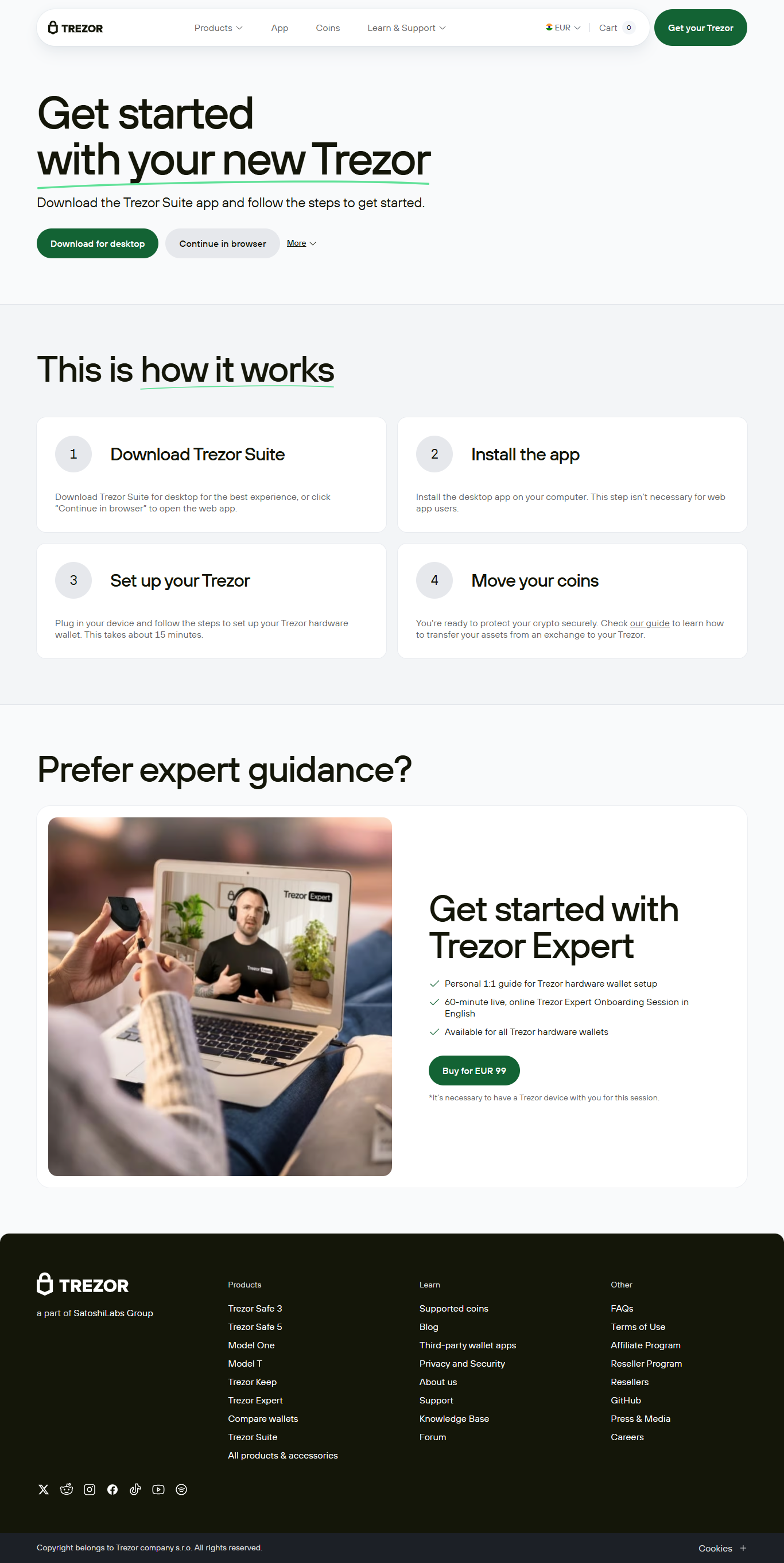
Once connected, visit the official Trezor website at Trezor.io/Start® to launch the Trezor Suite.
The Trezor Suite is a desktop and web application designed for managing your device and crypto assets safely.
On your computer screen, the Trezor Suite will prompt you to select your device model. Follow the on-screen instructions to proceed.
Step 3: Firmware Installation
Your Trezor device may require the latest firmware installation. Firmware updates are essential for maintaining security and adding new features.
Always download firmware updates only through the official Trezor Suite to avoid security risks.
- Click "Install Firmware" in the Trezor Suite when prompted.
- Follow the on-screen instructions carefully.
- Your device will reboot automatically once the firmware installation is complete.
Never disconnect your device during a firmware update. Interruption can render the device inoperable.
Step 4: Creating a New Wallet
Once the firmware is installed, you can create a new wallet. Trezor will generate a new recovery seed, which is a set of 12–24 words. This seed is your master key for all cryptocurrencies stored on the device.
- Follow the Trezor Suite instructions to create a new wallet.
- Write down each recovery word on the provided recovery card in the exact order.
- Verify your recovery seed when prompted by the device.
Important: Never store your recovery seed digitally or online. Physical storage is the safest method.
Step 5: Setting a PIN
To protect your Trezor device from unauthorized access, you must set a PIN. A PIN ensures that even if your device is stolen, your assets remain secure.
- Choose a PIN code using the on-device screen and confirm it on the Trezor Suite.
- Ensure the PIN is memorable but not easily guessable.
- Never share your PIN with anyone.
Step 6: Exploring Trezor Suite
The Trezor Suite provides a secure interface for managing your cryptocurrencies. You can:
- View your portfolio balances
- Send and receive crypto
- Install apps for additional coins
- Backup and recover wallets
Always double-check the recipient address when sending funds. Trezor Suite verifies addresses on-device to prevent phishing attacks.
Step 7: Security Best Practices
Security is the core of Trezor. Follow these best practices to maximize safety:
- Keep your recovery seed offline and secure.
- Never share private keys or seed words.
- Use a strong, unique PIN for the device.
- Update firmware regularly.
- Verify all transactions on the Trezor screen, not just the computer.
Step 8: Recovering Your Wallet
If you lose your Trezor device, you can recover your wallet using your recovery seed. Simply select "Recover Wallet" in the Trezor Suite and input your seed words in the exact order.
Once completed, all your crypto assets will be restored securely.
Step 9: Troubleshooting Common Issues
While Trezor is user-friendly, you may occasionally face issues. Common solutions include:
- If the device is unresponsive, reconnect it and restart the Trezor Suite.
- If firmware installation fails, ensure you use the official Trezor Suite and a trusted computer.
- For lost recovery seeds, Trezor cannot recover funds—always keep your seed safe.
Conclusion
Starting up your Trezor device is straightforward when following the official guidelines. Proper setup, PIN configuration, and recovery seed management are essential for keeping your cryptocurrencies secure.
The Trezor Suite complements the device with a powerful interface for crypto management while keeping your assets offline and safe.
By adhering to these steps and best practices, you can confidently start using your Trezor hardware wallet to manage your digital assets securely.